
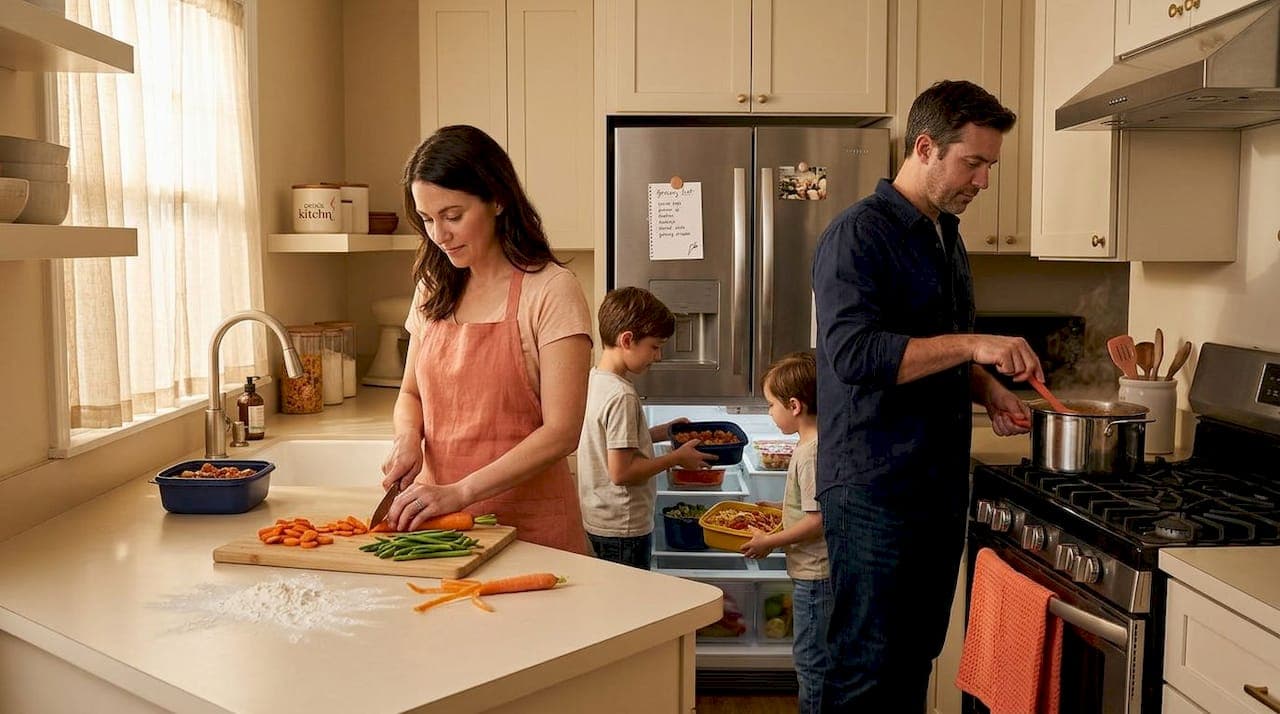
Most people assume cooking at home is the harder choice. Too much time, too much cleanup, not enough skill. But the benefits of cooking at home go well beyond saving a few dollars on takeout. Research consistently shows that home-cooked meals improve physical health, support mental wellbeing, build real culinary confidence, and create stronger family connections. This article breaks down 10 concrete advantages that make a compelling case for why getting back in the kitchen is one of the best decisions you can make for your health, your wallet, and your daily quality of life.
Table of Contents
- Key takeaways
- 1. Cooking at home saves serious money
- 2. You control exactly what goes into your food
- 3. Home-cooked meals support weight management
- 4. Cooking methods preserve more nutrients
- 5. Batch cooking reduces takeout temptation
- 6. Home cooking builds real culinary skills
- 7. Cooking is meditative and reduces stress
- 8. Shared meals strengthen family bonds
- 9. Home cooking reduces environmental impact
- 10. Home cooking builds lasting healthy habits
- My honest take on why home cooking changed everything for me
- Start cooking meals worth remembering with Ceceskitchn
- FAQ
Key takeaways
| Point | Details |
|---|---|
| Significant cost savings | A family of four can save over $5,000 annually by cooking at home instead of dining out regularly. |
| Better nutrition control | Home cooking lets you manage sodium, fat, and sugar intake in ways restaurant meals never allow. |
| Weight management support | Home-cooked meals promote satiety and have been linked to twice the weight loss of processed alternatives. |
| Creativity and skill growth | Cooking at home builds culinary confidence and opens the door to endless flavor experimentation. |
| Stronger social bonds | Shared home meals improve communication, reduce loneliness, and bring families closer together. |
1. Cooking at home saves serious money
The financial case for home cooking is hard to argue with. A home-cooked meal for a family of four typically costs $15 to $20, while the same family dining out can easily spend $60 to $100 in a single sitting. That gap adds up fast.
The average American already spends $2,500 per year on dining out. Cut that in half by cooking more at home, and you are looking at over $1,000 back in your pocket annually. Shift most of your meals home, and annual savings exceed $5,000 for a family.
Beyond the per-meal math, cooking at home builds real budgeting discipline. You start planning ahead, buying in bulk, and using what you have instead of defaulting to convenience spending. Financial wellness genuinely starts with smart food spending choices, and the kitchen is where that habit forms.
Pro Tip: Plan your meals for the week before grocery shopping. A simple list cuts impulse purchases and reduces food waste, stretching your grocery budget further than you expect.
2. You control exactly what goes into your food
One of the most underrated advantages of cooking at home is ingredient control. When you order from a restaurant or grab a processed meal, you have no idea how much sodium, added sugar, or low-quality fat went into it. At home, you decide everything.
Clinical experts recommend home cooking specifically to reduce ultra-processed food intake and lower cardiovascular risk. The connection is direct: processed foods contain additives, preservatives, and flavor enhancers that accumulate over time and strain your body. Home cooking removes most of that exposure.
You can swap refined oils for olive oil, reduce salt without sacrificing flavor, and load up on vegetables that restaurants typically treat as an afterthought. That level of control is simply not available anywhere else.
3. Home-cooked meals support weight management
The link between home cooking and weight management is stronger than most people realize. Home-cooked food promotes twice the weight loss compared to processed ready meals, even when calorie counts are similar. The reason comes down to food structure.
Whole foods require more chewing and slower digestion than soft processed items, which improves your fullness signals. Processed foods are engineered to be easy to overeat. A bowl of homemade lentil soup fills you up in a way that a bag of chips never will, even at the same calorie count.
"Home-cooked meals encourage mindfulness and a slower eating pace, both of which are directly linked to better weight management and healthier food relationships." — The Joys and Benefits of Home-Cooked Meals
Cooking at home also makes you more aware of portion sizes because you are the one plating the food. That awareness alone is a powerful tool.
4. Cooking methods preserve more nutrients
Not all cooking is equal, and one of the real health benefits of home cooking is choosing methods that protect the nutritional value of your ingredients. Steaming, roasting, and sautéing preserve vitamins and minerals far better than boiling or deep frying.
Boiling broccoli, for example, leaches water-soluble vitamins like vitamin C and folate directly into the cooking water. Steam it instead, and you retain the majority of those nutrients. Roasting vegetables at moderate heat concentrates flavor while keeping antioxidants intact.
When you cook at home, you make these choices consciously. Restaurants prioritize speed and taste, not your vitamin C levels. That distinction matters more over months and years than it does at any single meal.
5. Batch cooking reduces takeout temptation
One of the most practical advantages of cooking at home is building a personal supply of ready-to-eat meals through batch cooking. Batch cooking saves time and reduces mealtime stress, which is exactly what makes takeout so tempting in the first place.
Spend two hours on a Sunday cooking a large pot of soup, a grain salad, and a protein, and you have lunches and dinners covered for most of the week. Frozen portions extend that even further. The result is a personal convenience food supply that beats takeout on cost, nutrition, and satisfaction every single time.

Pro Tip: Double your recipes whenever you cook. Freeze half in labeled portions and you have a ready meal waiting on any night when cooking feels like too much effort.
6. Home cooking builds real culinary skills
There is a compounding effect to cooking at home that people rarely talk about. Every meal you cook teaches you something. How heat behaves. How to balance salt and acid. How to work with what is left in the fridge. Over time, cooking skill-building leads to adaptive meal strategies like leftover repurposing that lower your cost per meal and reduce waste.
Those skills also give you confidence. You stop following recipes rigidly and start cooking intuitively. That shift is genuinely freeing. You can explore quick weeknight dinners without stress because you trust your own judgment in the kitchen.
Cooking also sharpens problem-solving. Working with limited ingredients, adjusting seasoning on the fly, and timing multiple dishes at once are all mental exercises that transfer beyond the kitchen.
7. Cooking is meditative and reduces stress
This one surprises people. Cooking at home is meditative and stress-reducing in a way that few daily activities match. The repetitive, sensory nature of chopping, stirring, and tasting pulls your attention into the present moment. It functions almost like a mindfulness practice.
There is growing recognition that learning to cook supports mental health in meaningful ways. The act of creating something with your hands, from scratch, produces a quiet satisfaction that is hard to replicate with a delivery app. You end the process with a meal and a sense of accomplishment.
For people dealing with anxiety or burnout, cooking offers a structured, absorbing activity that gives the mind a genuine break from abstract worries.
8. Shared meals strengthen family bonds
The dinner table is one of the few places where families consistently gather without screens or distractions. Cooking at home creates that opportunity regularly. When you share a home-cooked meal, you create space for real conversation, and that matters more than most people credit.
Involving kids or partners in the cooking process deepens that connection further. Assigning age-appropriate tasks teaches responsibility, builds cooperation, and makes everyone feel invested in the meal. Family-style recipes designed for sharing naturally encourage this kind of collective participation.
Research consistently links shared meals to reduced loneliness, better mood, and stronger communication within households. The food is almost secondary. It is the ritual and the togetherness that carry the real value.
9. Home cooking reduces environmental impact
Takeout and restaurant meals generate a significant amount of packaging waste. Plastic containers, paper bags, sauce packets, and disposable cutlery add up fast across a week of meals. Cooking at home dramatically cuts that output.
Meal planning also reduces food spoilage. When you know what you are cooking each week, you buy what you need and use it. That discipline cuts down on the roughly 30 to 40 percent of food that the average American household throws away each year. Less waste means lower grocery costs and a smaller environmental footprint at the same time.
Choosing organic or locally sourced ingredients when cooking at home adds another layer of benefit. You reduce pesticide exposure and support local food systems in a way that ordering from a chain restaurant never allows.
10. Home cooking builds lasting healthy habits
The cumulative effect of cooking at home is a shift in how you relate to food. You stop seeing meals as transactions and start seeing them as something you create and control. That mindset change supports lifelong healthy eating in a way that short-term diets never do.
When you cook regularly, you naturally gravitate toward whole ingredients because you understand how to use them. You develop preferences for real flavors over artificial ones. You get better at listening to your hunger and fullness cues. These are not dramatic transformations. They are quiet, compounding improvements that accumulate over years.
The home cooked meal benefits extend well beyond any single dinner. They represent a sustainable relationship with food that supports your health, your budget, and your wellbeing for the long term.
My honest take on why home cooking changed everything for me
I resisted cooking for years. I told myself I was too busy, that I lacked the skill, that good takeout was close enough. I was wrong on all three counts.
What shifted for me was starting small. Not ambitious recipes, just simple meals I could make without anxiety. Once I stopped treating cooking as a performance and started treating it as a daily practice, everything changed. My grocery bills dropped noticeably within the first month. My energy improved because I was eating food I actually understood.
The creativity piece caught me off guard the most. I started experimenting with ingredients I had never used, combining flavors that sounded strange together, and occasionally producing something genuinely great. That feeling of making something from scratch, something you are proud to put on the table, is not something a restaurant can give you.
What I have learned is that the barriers to home cooking are mostly psychological. The time concern dissolves once you have a few reliable recipes in rotation. The skill concern disappears after a few weeks of practice. What remains is something that genuinely improves your daily life in ways you did not expect.
Home cooking is not just about food. It is about agency, creativity, and taking care of yourself in the most direct way possible.
— Michael
Start cooking meals worth remembering with Ceceskitchn
If this article has you ready to spend more time in the kitchen, Ceceskitchn is built exactly for this moment. Whether you are looking for budget-friendly weeknight meals, creative flavor combinations, or comfort food that does not weigh you down, the platform has the recipes and inspiration to match.
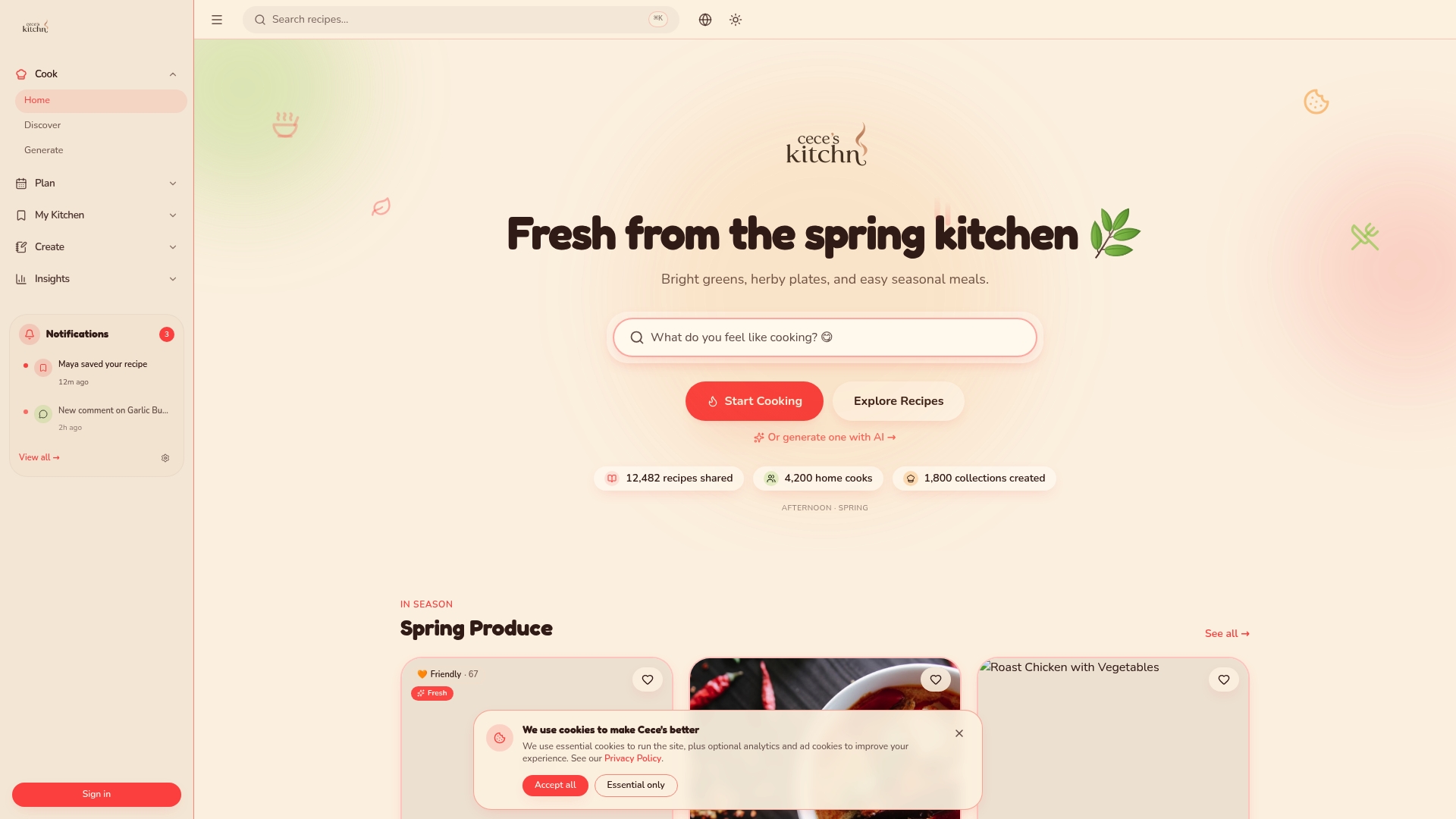
Ceceskitchn combines community-created recipes with smart recipe generation so you always have something worth cooking, regardless of what is in your fridge or how much time you have. You can generate a recipe based on your ingredients, dietary preferences, or mood, and get a meal idea that actually excites you. For home cooks who want to cook more consistently and more creatively, Cece's Kitchn is the practical starting point. Every meal you make at home is a step toward better health, a stronger budget, and a kitchen you actually enjoy being in.
FAQ
How much money can I save by cooking at home?
A family of four can save over $5,000 annually by shifting most meals from dining out to home cooking, based on the cost difference between a $15 to $20 home meal and a $60 to $100 restaurant meal for the same group.
Is home cooking actually healthier than eating out?
Yes. Home cooking gives you full control over ingredients, reduces exposure to ultra-processed additives, and has been linked to twice the weight loss compared to processed ready meals, even at similar calorie levels.
Do I need advanced cooking skills to benefit from cooking at home?
No. Simple techniques like roasting, steaming, and sautéing are easy to learn and already preserve more nutrients than many restaurant cooking methods. Starting with basic recipes builds skills quickly over time.
How does cooking at home help with mental health?
Cooking is a sensory, present-focused activity that reduces stress and builds confidence. Research links regular home cooking to improved mood, reduced anxiety, and stronger social connection through shared meals.
What is the easiest way to start cooking at home more often?
Batch cooking on weekends is one of the most effective starting points. Preparing several meals at once reduces daily cooking time, cuts reliance on takeout, and makes healthy eating far easier to maintain throughout the week.